
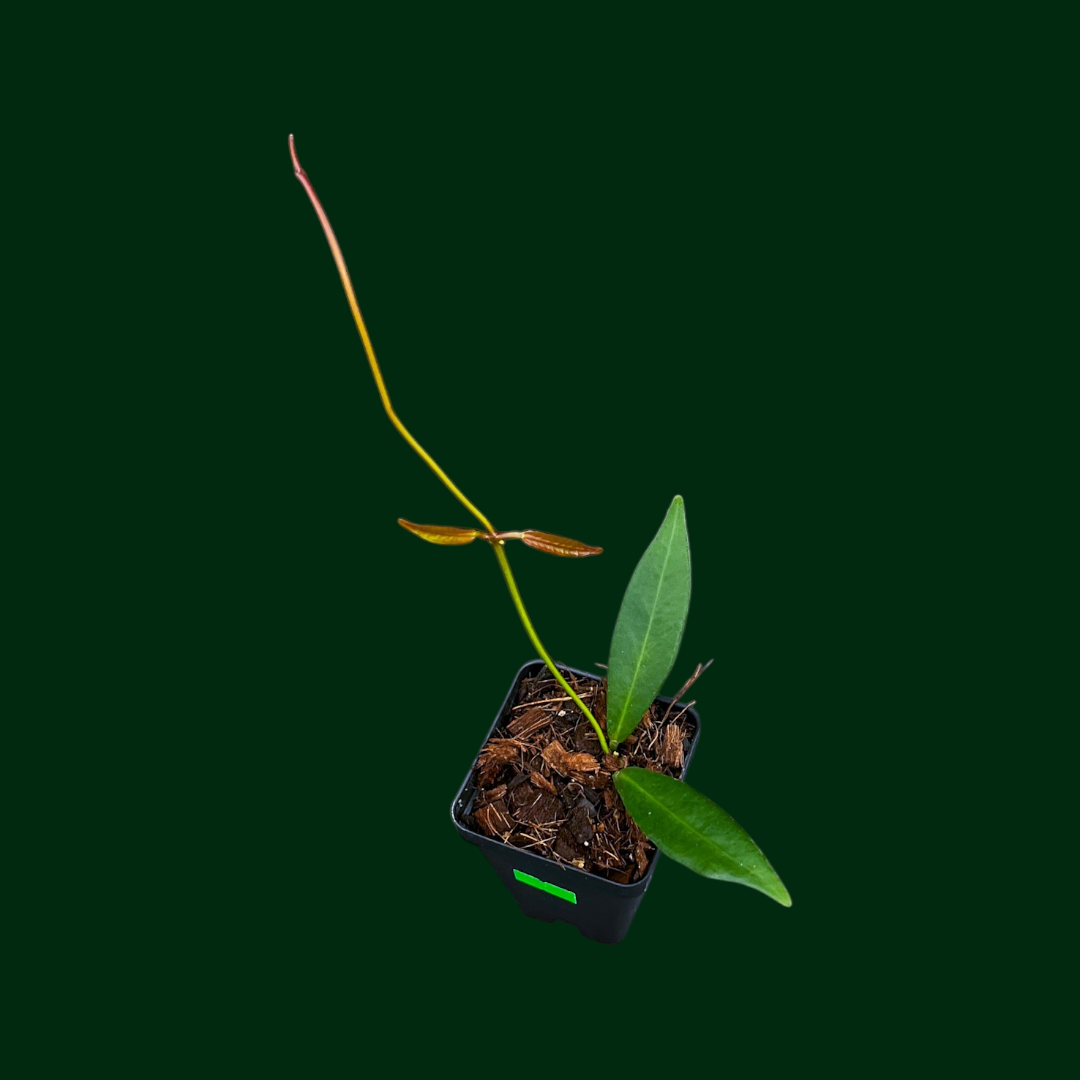
Hoya apoensis (long leaf)
Origin and Description: Hoya apoensis (long leaf), commonly known as the Mount Apo Wax Plant, is an evergreen vine native to the tropical rainforests of Southeast Asia, particularly the Philippines. It thrives in mountain lowlands and montane mossy rainforests up to 1,000 meters in elevation.
This species features glossy, dark green leaves and produces clusters of star-shaped flowers that are typically white or light pink, emitting a pleasant fragrance. This version of Hoya apoensis has longer, more dagger-like leaves when compared to the regular apoensis or short leaf variants, making it a fun addition to your collection!
Natural Habitat: In its natural environment, Hoya apoensis (long leaf) grows as an epiphyte (tree climber) in humid, tropical forests, often found clinging to trees where it enjoys filtered light and consistent moisture. Due to its presence in higher elevations, it tolerates cooler temperatures.
Care Instructions:
-
Light: Provide bright, indirect light to mimic the natural, filtered sunlight Hoya apoensis (long leaf) experiences in the wild. Avoid direct sunlight, which can scorch the leaves. Placing it near a south-facing window with sheer curtains is ideal for both growth and blooming.
-
Watering: Allow the top inch of soil to dry out between waterings. Overwatering can lead to root rot, so ensure the soil is well-draining. During the growing season, water more frequently, reducing the frequency during the winter months.
-
Humidity: Hoya apoensis (long leaf) thrives in moderate to high humidity levels, ideally between 60-80%. Consider using a humidity tray or room humidifier, or grouping it with other humidity-loving hoyas if growing indoors, especially in arid climates.
-
Temperature: Hoya apoensis (long leaf) prefers temperatures between 65-80°F (18-27°C). Protect it from cold drafts and avoid exposing it to temperatures below 50°F (10°C). Maintaining a stable temperature environment will promote healthy growth.
-
Soil: Use a well-draining, airy mix such as orchid bark, perlite, and coco coir to replicate its natural epiphytic conditions. A light and airy mix is essential to prevent waterlogging and ensure root health.
Fun Fact: The name "apoensis" is derived from Mount Apo, the highest mountain in the Philippines, indicating the native region of Hoya apoensis (long leaf). It was discovered, described, and published by botanists Dale Kloppenburg and Simeona V. Siar, both whom dedicated most of their careers to discovering new species of hoya. Add this natural beauty to your home today!
- In stock, ready to ship
- Inventory on the way
In-Store Pickup
Unsolicited Plant Talks
34162 Avenue G, Yucaipa CA 92399